
Introduction
Offset printing, also called litho printing, transfers ink from metal plates to a rubber blanket and then onto paper. It's still the process behind most mass-produced magazines you'll find on newsstands or in waiting rooms.
For publishers, marketers, and designers across Chicagoland, how offset works directly shapes quality, cost-per-copy, and turnaround on every print decision you make.
Offset gets mentioned constantly in printing quotes and vendor conversations, but rarely explained at the mechanical level. This article breaks down exactly how it works, what affects the final quality, and when it's the right or wrong choice for your next magazine run.
Key Takeaways
- Offset delivers sharp, color-accurate magazine pages at high volume using CMYK plates and a blanket cylinder
- Setup costs are fixed, so per-page costs drop sharply as print quantity rises
- Finished quality hinges on paper stock, ink type, and tight registration
- Digital printing wins for small, personalized, or fast-turnaround magazine jobs
What Is Offset Printing?
Offset printing is a lithographic process. An inked image transfers ("offsets") from a metal printing plate onto a rubber blanket, then from that blanket onto paper. The plate never touches the paper directly.
That indirect transfer is the whole point. It's designed to produce consistent, high-resolution, richly colored pages at a low per-unit cost, but only once you're printing at scale. The more copies you run, the cheaper each one gets.
How it differs from other methods:
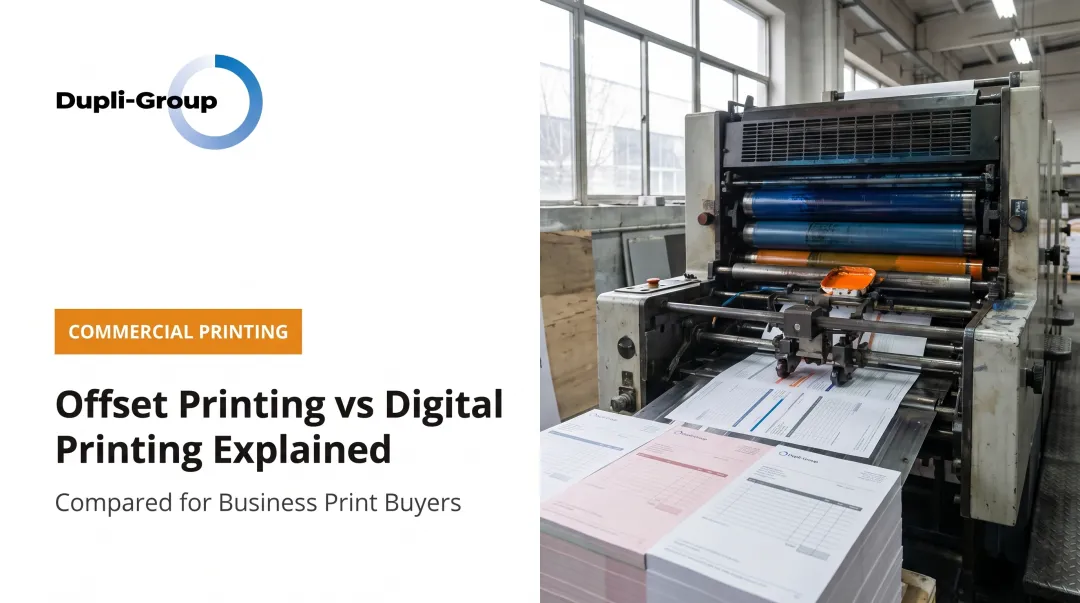
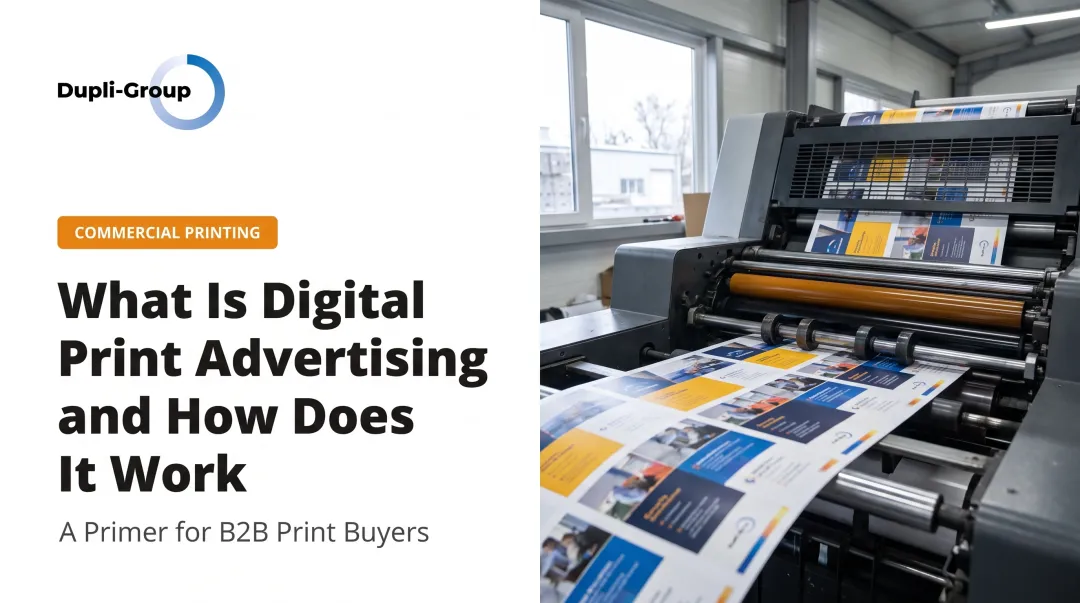
- Digital printing prints straight from a digital file to paper, no plates required. There's no setup cost, but each page costs more individually.
- Letterpress, offset's ancestor, presses raised type or images directly onto paper; offset replaced it for cleaner detail and far higher volumes.
For a 64-page glossy magazine running into the tens of thousands, offset is usually the only method that makes financial sense.
Why Offset Printing Is Used for Magazines
Magazines live and die by color consistency. A cosmetics ad on page 12 needs to look identical to the same ad running in every other copy of that issue, across a press run that might stretch into the tens of thousands. Offset's plate-based repeatability delivers that consistency in a way most alternatives struggle to match.
Cost-volume economics are the bigger driver, though. Prepress work (plate-making, ink calibration, press setup) is the major upfront expense in offset printing. But once that setup is done, the per-page cost drops sharply as the run grows.
There's no single, universal copy count where offset always beats digital. WhatTheyThink's reporting on the digital-versus-offset crossover explicitly pushes back on generic break-even numbers that get thrown around in the industry, even though figures like 4,000 or 5,000 copies show up often in conversation.
The real crossover depends on page count, paper stock, color coverage, and finishing. That's why a job-specific quote matters more than any rule of thumb.
Without offset at high volumes, publishers commonly run into:
- Color drift across large batches
- Higher per-unit costs that never come down
- Digital press speeds that can't keep pace with runs in the tens of thousands
Decades of publishers optimizing for quality-per-dollar have simply converged on offset for this work. Koenig & Bauer notes that web offset is widely used across magazines, catalogs, and newspapers precisely because those formats depend on high-volume, repeatable output.
This is why full-service Chicago printers like Dupli-Group keep both litho and digital presses running side by side. A magazine client with a 15,000-copy quarterly issue gets routed to the litho press; a client needing 300 personalized event programs by Friday gets routed to digital. Same shop, different tool for the job.
How Magazines Are Printed With Offset Printing (Step by Step)
Offset printing takes a print-ready CMYK file, images it onto plates, and runs paper through a press where ink moves from plate to blanket to paper. What goes in: a calibrated digital file, chosen paper stock, and matched ink. What comes out: physical, bound-ready sheets with vivid, durable color.
The core mechanism is an alternating oil-and-water process that keeps blank areas ink-free while transferring image areas cleanly. Registration checks and press proofs lock that control in before the full run begins.
Step 1: Prepress and Plate-Making
The magazine's digital files are color-separated into cyan, magenta, yellow, and black. Each color is digitally imaged onto its own aluminum plate: four plates for standard CMYK, more if the design needs spot colors such as Pantone inks.
Step 2: Mounting and Ink/Water Application
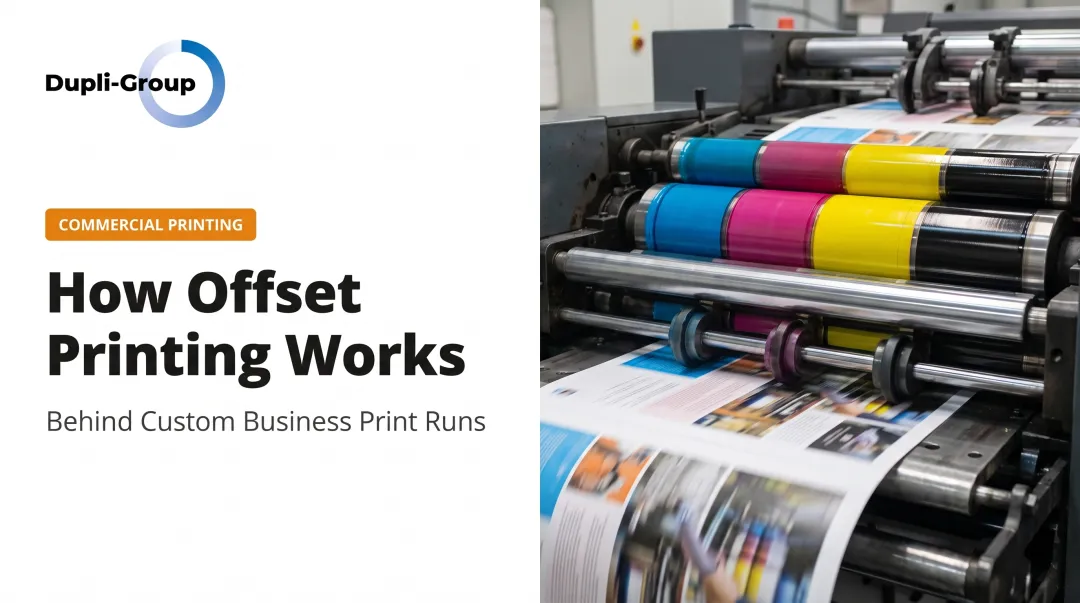
Each plate wraps around its own cylinder on the press. A damping roller applies water to the blank, non-image areas. An oil-based ink roller then inks the image areas. Because ink and water repel each other, the two stay cleanly separated.
Step 3: Offsetting Through the Blanket Cylinder
Here's where the name comes from. The inked image doesn't go straight onto paper. It transfers first from the plate cylinder to a rubber blanket cylinder, and only then onto the paper as it passes between cylinders. This indirect handoff is what gives offset its sharper, cleaner detail compared to direct-to-substrate methods.
Step 4: Drying and Finishing
Drying powder or an aqueous coating sets the ink so it won't smudge or transfer to the next sheet. Pages then move into cutting, folding, and binding: saddle-stitch for thinner magazines, perfect binding for thicker ones.

Key Factors That Affect Offset Print Quality for Magazines
A handful of variables separate a crisp, vibrant issue from a muddy one:
- Paper weight and coating. Gloss stock punches up photo vibrancy and color saturation; matte and uncoated stocks mute color slightly but reduce glare, which matters for text-heavy pages.
- Print run volume. Very short runs may not justify the cost of plate setup at all. That tipping point is usually where digital becomes the smarter call.
- Ink type and environmental impact. Soy-based inks and FSC-certified paper stock cut environmental footprint without sacrificing color quality. Dupli-Group switched to 100% soy ink in 2005 and has used it ever since.
- Press calibration and registration accuracy. Misaligned plates cause color shift or "ghosting" on large solid-color backgrounds, the kind of defect that's obvious on a magazine cover but easy to miss on a smaller proof.
Dupli-Group's Komori Lithrone press also runs an aqueous coater, giving publishers a choice between gloss, dull, or satin finish depending on how the magazine's photography needs to read on the page.
Offset vs. Digital: Misconceptions and When to Choose Each
Misconception #1: Offset is always higher quality than digital. It used to be a clear gap. Today, at normal reading distance, digital output is close enough that cost and run size usually matter more than visible sharpness. The decision is economic, not just a quality call.
Misconception #2: "Offset printing" and "offsetting" are related. They're not. Offset printing is the plate-to-blanket-to-paper process described above. Offsetting (sometimes called set-off) is a drying defect where wet ink transfers onto the back of the next sheet in a stack. Same root word, completely unrelated meanings.
Once quality myths and terminology mix-ups are out of the way, the real choice comes down to run size, timeline, and job specs.
When digital wins instead:
According to HP's comparison of offset and digital production, digital presses skip physical plates entirely, which means shorter setup and faster turnaround. That advantage shows up in a few scenarios:
- Very small runs — Dupli-Group generally recommends digital for runs under roughly 1,000 brochures or 250 business cards
- Tight deadlines — anything needing turnaround under 5 business days, including same-day jobs
- Variable data — individually addressed direct mail or personalized content, which offset plates simply can't do
When offset still wins:
- Paper thicker than 14 pt
- Finished sizes larger than 12"×18"
- Jobs where large solid-color areas make quality the top priority

Frequently Asked Questions
What is magazine offset printing?
Magazine offset printing is a lithographic process that uses CMYK aluminum plates and a rubber blanket cylinder to transfer ink onto paper. It delivers strong color accuracy and consistent quality on high-volume runs.
Is offset printing still used for magazine printing?
Yes, especially for large-circulation titles. Digital has taken over shorter, niche, and on-demand magazine runs, but offset still dominates high-volume publishing.
What are some examples of offset printing for magazines?
National consumer magazines, catalogs, and large-run trade publications are common examples. Most use either web offset (printed from a continuous roll) or sheet-fed offset (printed on individual cut sheets).
How many copies does a magazine need to make offset printing worthwhile?
There's no universal number, despite figures like 4,000 or 5,000 copies circulating as rules of thumb. Breakeven depends on page count, paper stock, and finishing—get a project-specific quote for a reliable number.
What's the main difference between offset and digital printing for magazines?
Offset uses plates and wet ink, which suits large runs at a lower per-page cost. Digital prints straight from a file with no setup, making it better for small or fast-turnaround jobs.
How long does it take to print a magazine using offset printing?
Offset takes longer than digital because of prepress plate-making and press setup time. Exact turnaround depends on page count, run size, and the finishing work required.